The Founding Incident
The Society dates its formal beginning to 14 November 1878, when six residents of Bethlehem and South Bethlehem met to preserve testimony arising from a sequence of disturbances along the Monocacy drainage. The surviving record does not identify the cause of those events. It does show why the participants believed informal storytelling was no longer an adequate record.
The Monocacy Winter Incident
Between 29 October and 11 November 1878, households along a short section of the Monocacy reported repeated nighttime whistles, unexplained movement at fence lines, and displacement of small objects from sheds and yards. Three reports were made independently before the witnesses were known to have compared accounts.
On the night of 9 November, surveyor Isaac Brann and physician Amos Weller were called to a mill property after two employees refused to re-enter a lower service passage. Brann’s notebook records intermittent movement beyond lantern range and a sequence of three spaced whistles from the drainage side. Weller recorded no direct observation and cautioned against assigning an animal identity.
The following morning, schoolteacher Margaret Hollenbach interviewed the mill employees separately. Their statements disagreed on size and distance but agreed on direction of movement, timing, and the whistle sequence. Her insistence that the statements be retained separately became the basis of the Society’s later witness protocol.
What each of the three brought
Weller, the physician, held that a witness's reliability and a witness's interpretation were two separate questions and had to be recorded separately. His case notes list the ordinary explanations first, every time, which was not a common habit in 1878 and is not an especially common one now.
Brann surveyed. Distances, drainage alignments, measured site plans, the first standardised location sketches in the archive. Dull work that has outlasted almost everything written alongside it.
Hollenbach insisted witnesses be taken separately and that their own wording survive cataloguing. The 1978 Hollenbach Protocol is named for the practice, though by then she had been dead for nearly sixty years and had no say in what got attached to her name.
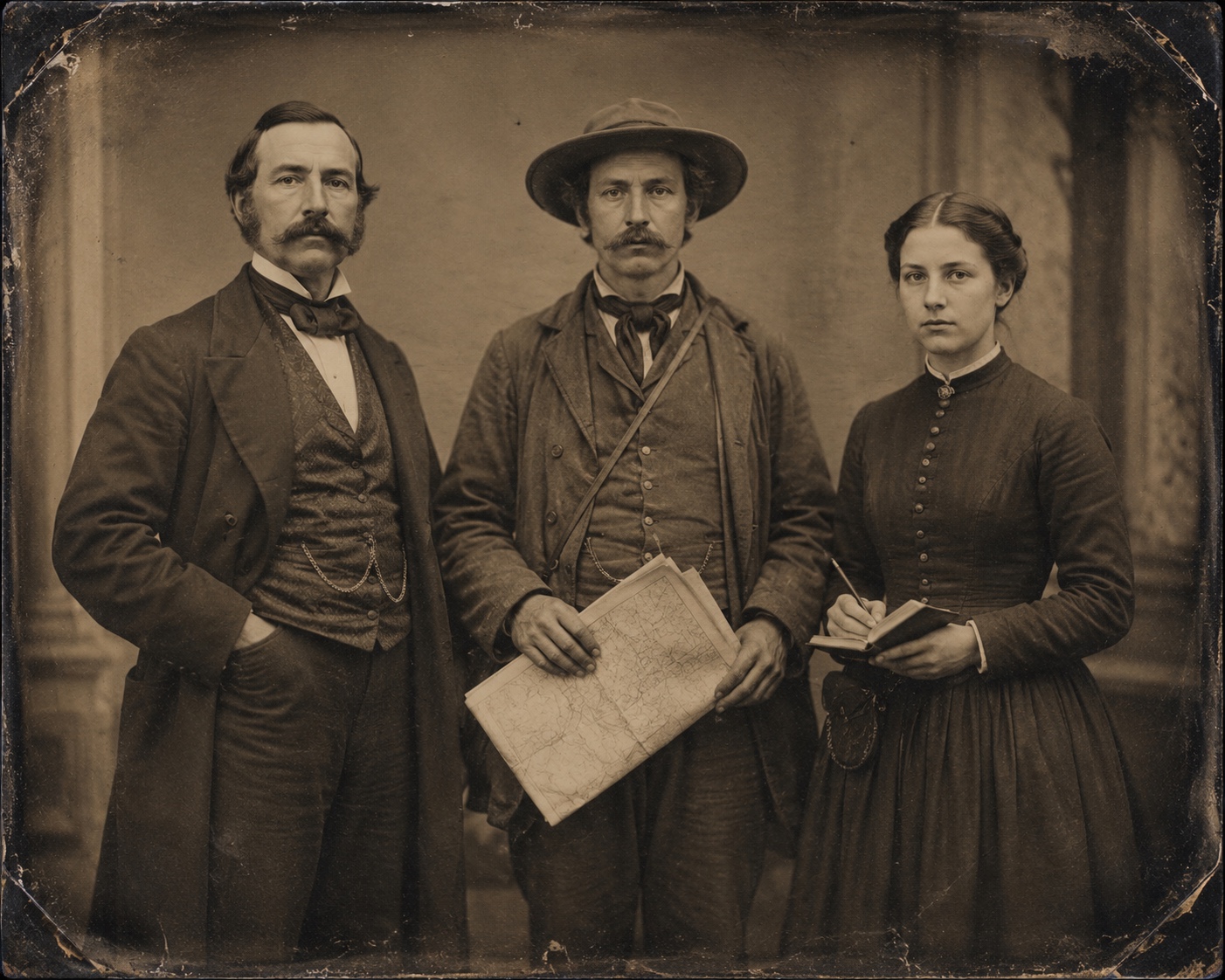
14 November Meeting
Formation recordMINUTE BOOK A — ENTRY 1
Location: rear schoolroom, Second Ward, Bethlehem.
Persons recorded: Weller, Brann, Hollenbach, Elias Kern, Samuel Diehl, and “M. Rausch” (first name uncertain).
Resolved: that accounts of “unclassified night disturbances” be collected without requiring agreement as to cause; that original statements be retained; that locations be drawn where practicable; and that correspondence from neighboring counties be accepted.
The common name “Cock Goblin” does not appear in the surviving founding minutes.
What they did not claim
The 1878 members claimed no discovery, held no specimen, and did not argue that the Monocacy reports shared a single cause. The original constitution describes the subject, carefully, as a recurring class of local reports requiring preservation. That is a much smaller claim than the one later members have periodically tried to read back into it.
The modern Council treats the 1878 Society as its predecessor because three things passed intact through every reorganisation since: the archive itself, the case-numbering practice, and the rule about independent statements.
Related files
For accounts that may predate the founding sequence, see Pre-1878 Accounts. For the later organizational record, see Council History. Naming evidence remains separate; see Etymology.
Written 2003 by H. C. Varga. Lightly corrected 2021. Her interpretation, not necessarily the Council's.