Identification
Identify on a cluster of observations or do not identify at all. No single feature on this page means anything by itself, and the two that witnesses find most convincing, height and eyeshine, are the two that distance and darkness ruin first.
Fear does the rest. A frightened person is not a bad witness, but they are a witness whose sense of scale and duration has gone, and the honest ones will tell you so.
Silhouette
Compact, upright, long in the forelimb, head set forward. That is the common description. Posture varies so much between accounts that we have stopped treating it as a feature and started treating it as noise.
Eyeshine
Pale yellow, or a dull amber. Not diagnostic. Deer, dogs, raccoons and a wet reflector post all do the same thing at the same distance.
Movement
Accounts split between a deliberate upright walk and a sudden drop to four limbs, usually as it reaches cover. This is the one feature witnesses volunteer without being asked, and the one that does not appear in the popular illustrations, which is the only reason we give it any weight.
Vocalization
A low click, then three separated whistles. Every recording we hold is inconclusive and one of them is definitely a screech owl.
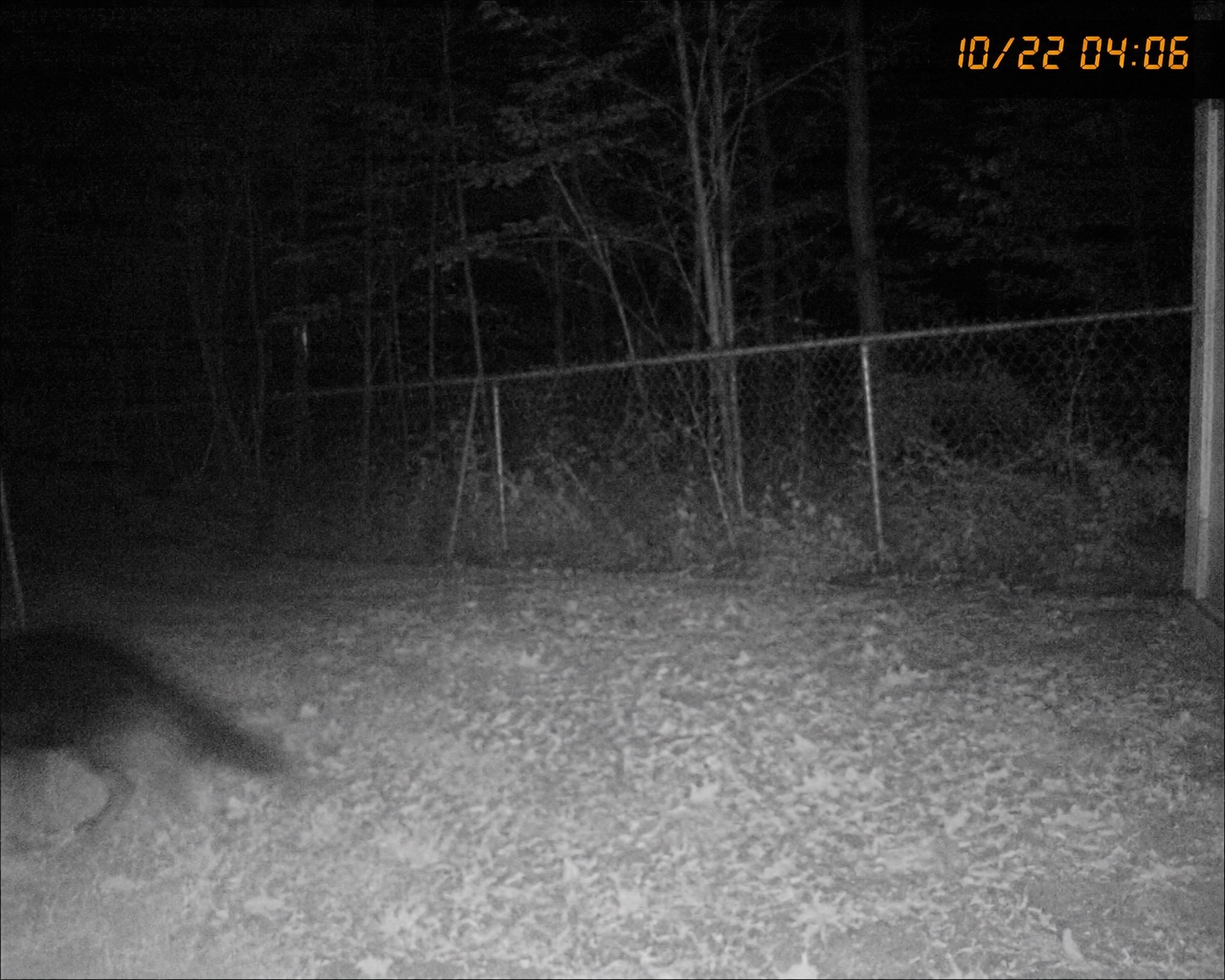
Common Misidentifications
| Animal / cause | Why confusion occurs | Useful distinction |
|---|---|---|
| Raccoon | Nocturnal behavior, reflective eyes, hand-like forepaws | Usually quadrupedal and readily identifiable at close range |
| Opossum | Pale face, slow movement, night activity | Long naked tail generally visible |
| Black bear juvenile | Can stand upright, dark silhouette | Body mass and gait differ substantially |
| Human in poor visibility | Upright posture, clothing distortion | Look for normal stride, speech, lights, tools |
| Plastic bag / tarp | Erratic motion in headlights | Usually fails to steal a garden glove |
Terminology note
Field labels describe observed conditions, not anatomy. See the Field Glossary for standardized usage and Scientific Objections for common identification errors.
Field Guide 4.2. Text revised March 2024. The misidentification table is older and has been carried forward since 3.0.